- Virtual Human Economy
- Posts
- Why Caring Matters
Why Caring Matters
The AI UX Problem That's Making Us Less Human

Natalie Monbiot
August 08, 2025
💡 What’s Top of Mind This Week
Why Caring Matters just went live on my Substack—an in-depth look at why UX, not just algorithms, drives meaningful AI interactions.
Caring isn't what you think it is.
I'm not talking about empathy or compassion. I'm talking about the cognitive willingness to stay present with uncertainty while remaining deeply invested in the outcome.
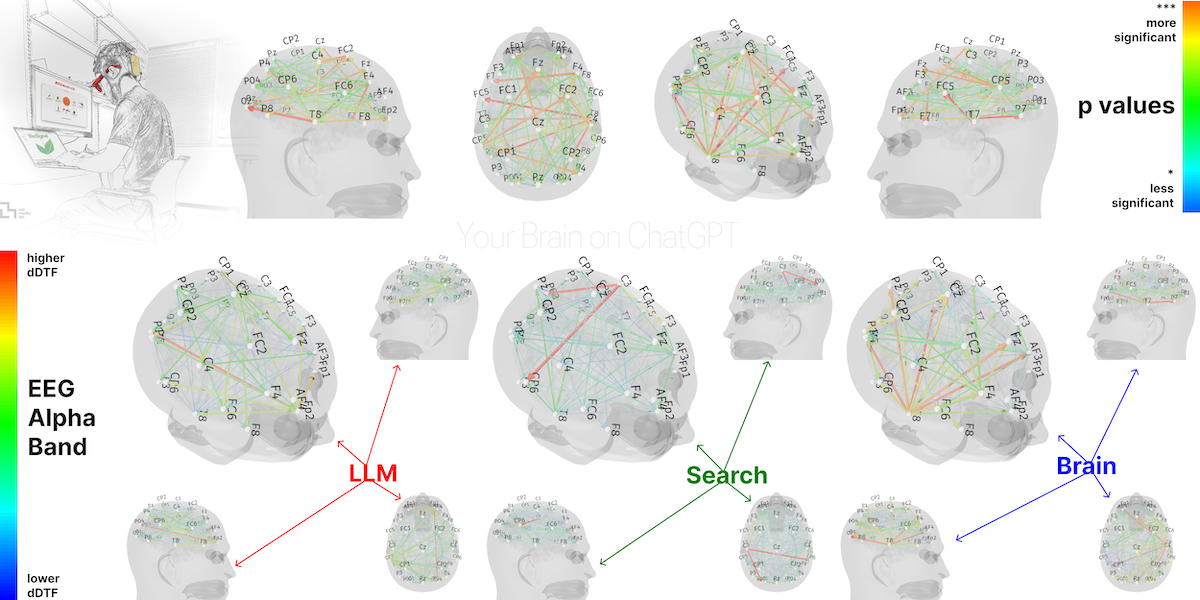
An MIT Media Lab study by Nataliya Kosmyna, Ph.D shows what happens when we bypass this: students using AI at the start of writing showed weaker neural activity, less ownership, and produced what judges called "soulless" text. They didn't care about the ideas, so nothing encoded.
What if we're facing not an AI problem but a UX problem?
Current AI interfaces flood us with answers, eliminating the productive friction that creates growth. But cognitive scientist John Vervaeke shows that caring is essential cognitive architecture—without it, we can't navigate complexity or determine what's worth our attention.
To cease caring would perhaps be AI's most dehumanizing outcome—but it's not inevitable.
The solution is designing "thought partner engines" that support rather than shortcut the caring process.
We don't have to lose our capacity to care. We just have to design for it.
🤖 AI UX Update: ChatGPT Study Mode
OpenAI released "Study Mode" this week—“a new way to learn in ChatGPT that offers step-by-step guidance instead of quick answers.”
Following up on my exploration of caring, I found this timely release fascinating but also concerning. Rebecca Winthrop's experiment surfaced UX red flags, notably ChatGPT suggesting, “Here’s your reflection rewritten to sound more personal, as if it’s your own perspective.”
While the mode promotes deeper encoding by guiding active reflection, it still instructs students on what to think, subtly nudging them to claim ownership of ideas that aren't genuinely their own.
I hope future iterations will address these core design issues, as they reflect broader problems—AI interfaces built without prioritizing genuine human agency and flourishing.
🚀 VHE in Action: Wizly Collections
Previously, I've shared how I'm monetizing my voice through ElevenLabs—now I'm expanding to monetizing my expertise through Wizly. This platform transforms individual consultants into AI-powered firms, offering practical demonstrations of Virtual Human Economy principles delivering measurable ROI.
🎨 Artist and the Machine Summit 2025
I'm thrilled to be continuing my collaboration with Artist and the Machine, and our next Summit on November 20 in Los Angeles. We have exciting things in store - including a secret location and outstanding talent - to dive deep into the future human creativity and AI.
Secure your spot now: 🔗 Register here

🎤 Speaking News
Excited to share I'm now represented by Stern Strategy, who also represent AI luminaries like Gary Marcus, Erik Brynjolfsson and Rana El Kaliouby. I’m especially excited about the theme of Human flourishing in the age of AI: how collaborating with AI the right way can spark a wisdom upgrade and drive our species’ evolution.

🔬 Research Corner
Referenced in my latest Substack - MIT Media Lab research showing when and how we use AI affects cognitive engagement and personal ownership of ideas.
🌟 Take Action
Ready to lead in the AI era? Enroll in my course: AI-Powered Leadership: Elevating Human Capabilities.
📬 Stay Connected
• Follow my Substack for deep-dive essays: natlikethat.substack.com
• Subscribe to my newsletter at news.vhe.xyz
• Connect on LinkedIn: Natalie Monbiot
• For anything else reach me at [email protected] !